


We received a question after our most recent webinar about the use of glasses and especially multi-focal lenses when performing the Dynamic Visual Acuity and Gaze Stabilization tests. It is usually best to do the test in the subject’s “habitual” state of correction, meaning the way they normally would be. If they would normally be wearing glasses, test with the glasses on or contact lenses in. There are however several considerations for those patients wearing bi-focal or multi-focal lenses.
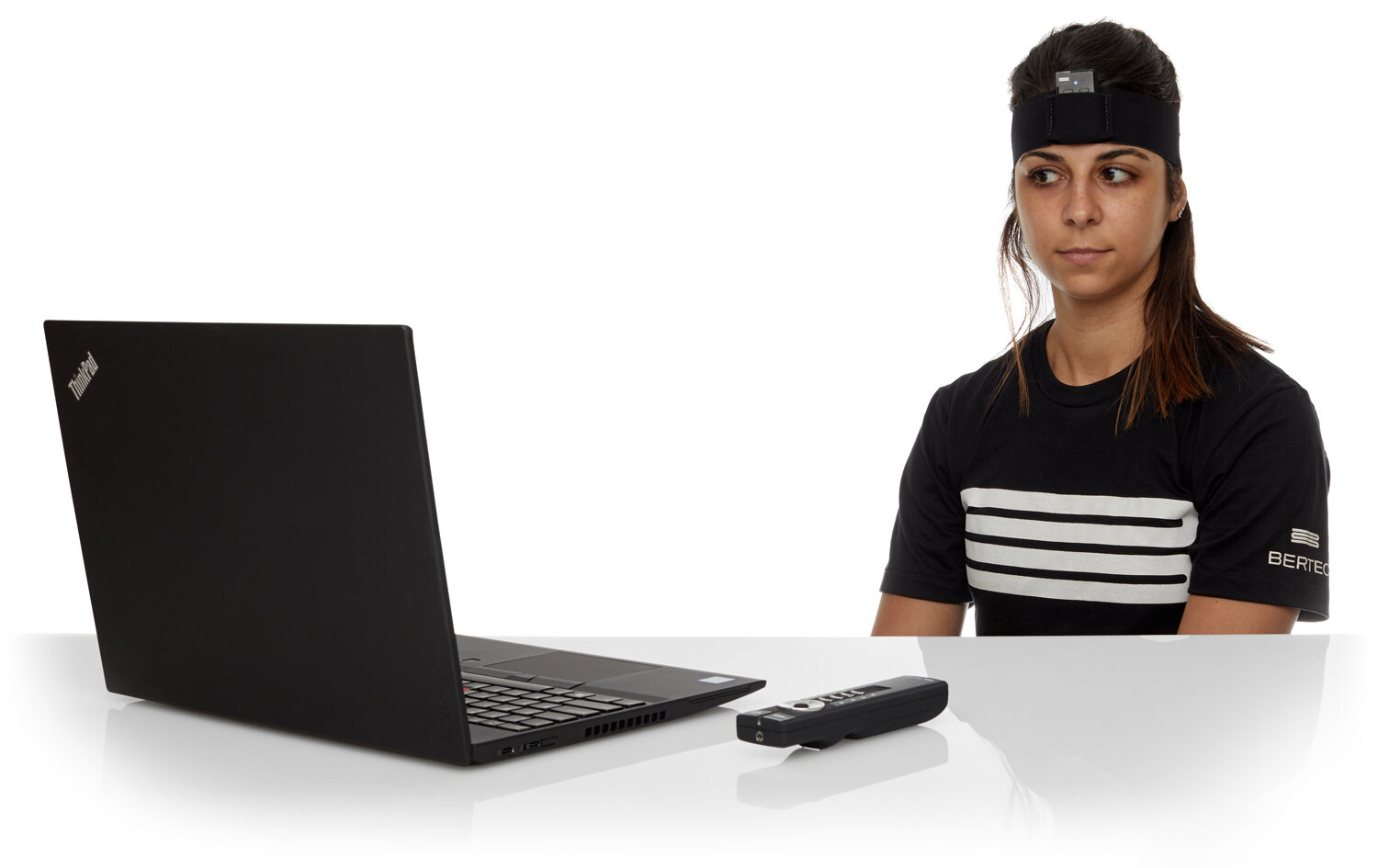
Most subjects above the age of 45 will be wearing some form of multi-focal correction and after the age of 55, most have lost their ability to shift focus at all, due to normal aging and presbyopia. This means that at a test distance of 1 meter, the beginning presbyope (those around 40 to 45) will probably still be able to focus on the targets presented without the need for near lenses, but the complete presbyope will not be able to see even a meter away clearly without help. The further the test distance, especially beyond 3 meters or 10 feet, the less important this becomes. If the BVA testing is done beyond 10 feet the accommodative demand has little or no effect as the distance portion of the correction is used.
However, the complete presbyope (the 50- 55 and up group), will be out of focus 1 diopter at 1meter. A one diopter blur will drop someone with 20/20 vision to approximately 20/40, or a difference of 4 lines on the chart. This may not seem as important in DVA testing because we are looking for a difference of 2 lines or more from baseline, so if the baseline is 20/40 instead of 20/20, the test may still be valid. If there best corrected visual acuity was 20/40 this would be true. However, since this is a thresholding format test, where we are asking them to see it as clear as possible, and read the smallest row possible, I assure you that they will adjust their eyes and head to look through the multi-focal to accomplish that task. When wearing a progressive multi-focal lens, this means they must look through the portion of the lenses that has approximately a one diopter add power, which also happens to be the narrowest portion of a progressive lens’ corridor. The lined bifocal wearer will not see that distance clearly with the top of the lens because it is too close, and it will be even more blurred through the bifocal because it is too far away, this distance would require a tri-focal type correction for the complete presbyope. If the subject is not viewing the target through the central 10 degrees of the multifocal, they will start to be outside the corridor of clear vision, and significant blur will occur. This blur is due to distortion from the glasses and not due to a break down in VOR response.
The Bertec BVA computerized test tries to compensate for this problem by presenting the target during the peak acceleration time of the head movement. This is also the point when the eyes should be looking straight ahead and aligned through the center of the multi-focal. The manual or bedside test has no way of compensating for this problem, and it is compounded by the typically closer test distance.
The bottom line is to use of test distance of 3 meters or beyond, whenever possible, for those subjects in multifocal corrections.
To watch the webinar, please click the link below, and subscribe to @BertecHQ on YouTube:

